
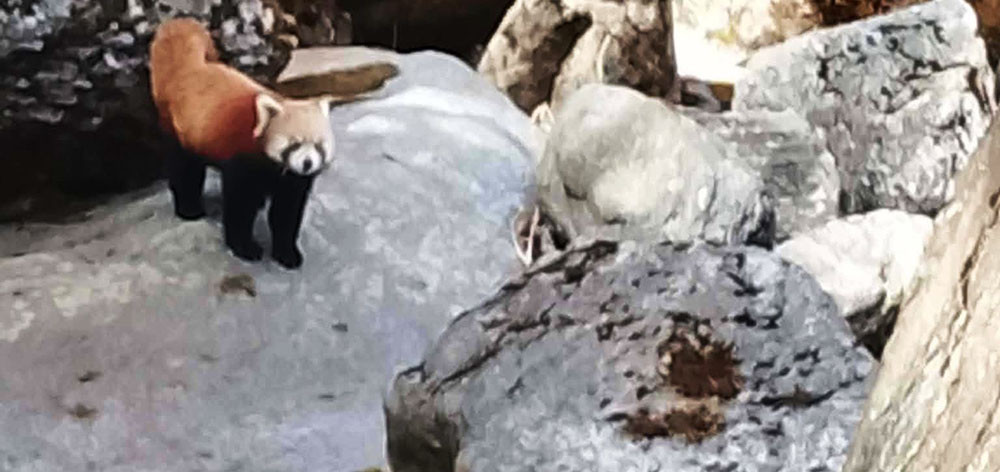
Kalikot, Nepal — The presence of the rare and endangered Red Panda, locally known as Habre, has been confirmed in three local government areas of Kalikot District, marking a significant development for biodiversity conservation in western Nepal. Traditionally, the species has been associated with the high-altitude forests of eastern Nepal, making its confirmed presence in Karnali Province an important ecological finding.
According to conservation organizations and local authorities, biodiversity monitoring conducted in Tilagufa Municipality, Mahawai Rural Municipality, and Shubhakalika Rural Municipality has verified the existence of Red Pandas in these regions.
Where Were the Red Pandas Found?
Conservation groups reported sightings and evidence of Red Panda presence in:
- Rurubanchu Pasture in Tilagufa Municipality–10
- Haudi Lake area in Shubhakalika Rural Municipality–6
- Mahawai Pasture in Mahawai Rural Municipality–2
Dilip Kumar Shahi, Kalikot District Coordinator of conservation organization Hurundek Nepal, stated that both direct and indirect evidence of Red Panda activity was recorded during field surveys in the Rurubanchu area.
He added that awareness campaigns are also being conducted to encourage local communities to protect bamboo and dwarf bamboo forests, which are critical habitats for the species.
Challenging the Belief That Red Pandas Are Limited to Eastern Nepal
For many years, Nepal's Red Panda population was believed to be concentrated primarily in eastern and central hill districts such as Ilam, Panchthar, Taplejung, Sankhuwasabha, Rasuwa, and Rolpa.
However, recent observations from the high-altitude forests of Karnali and Sudurpashchim provinces suggest that the species may have a wider distribution than previously thought.
Wildlife experts believe that factors such as climate change, habitat conditions, food availability, and ecological suitability may be influencing the expansion of Red Panda habitats into new regions.
Why Is Kalikot Important for Conservation?
According to Tilagufa Municipality Mayor Mahendra Bahadur Shahi, local residents had long reported occasional sightings of Red Pandas in the Rurubanchu area. Recent scientific surveys have now confirmed those reports.
He said that local governments, conservation organizations, and community groups are working together to protect the species through awareness programs, habitat conservation, and efforts to prevent forest degradation.
Similarly, Shubhakalika Rural Municipality Chairperson Govinda Prasad Acharya noted that the Haudi Lake region has now been identified as an important Red Panda habitat.
Why Are Red Pandas Endangered?
The Red Panda is classified as an endangered mammal globally. It typically inhabits cool temperate forests at elevations between 2,200 and 4,800 meters above sea level and relies heavily on bamboo and dwarf bamboo as its primary food source.
Conservationists identify several major threats to the species:
- Destruction of bamboo forests
- Uncontrolled forest fires
- Grazing pressure and human disturbance
- Road and infrastructure development
- Attacks by domestic and stray dogs
- Habitat changes caused by climate change
Experts emphasize that Red Pandas are shy and solitary animals that require relatively undisturbed environments to survive and reproduce.
New Opportunities for Ecotourism and Research
The confirmation of Red Panda presence has opened new possibilities for ecotourism in Kalikot's high-altitude regions. Areas such as Rurubanchu Pasture, Haudi Lake, and Mahawai Pasture are already known for their natural beauty, mountain scenery, and rich biodiversity.
Environmental experts believe that if scientific research, habitat conservation, and community-based tourism development are pursued together, Kalikot could emerge as a new destination for Red Panda tourism in Nepal.
Need for Further Scientific Study
While conservationists view the findings as highly encouraging, they stress that more comprehensive research is needed to determine the actual population size, habitat quality, breeding patterns, and long-term survival prospects of Red Pandas in the region.
Experts recommend additional studies using camera traps, DNA analysis, and regular biodiversity monitoring across Kalikot's forest ecosystems. Such research would provide a clearer understanding of the species' status in Karnali Province and help guide future conservation policies.
Conclusion
The confirmation of Red Panda presence in three local government areas of Kalikot represents more than just a wildlife sighting—it highlights the ecological significance and rich biodiversity of Nepal's Karnali region. With effective conservation efforts, scientific research, and sustainable tourism development, Kalikot has the potential to become an important center for Red Panda conservation in the years ahead.